How to Sleep Better Naturally: Simple Habits for Deep, Restful Sleep
A good night’s sleep is one of the most important foundations of a healthy life.
What will happen when you sleep well?
- When you sleep well
- Your body gets time to repair itself,
- Your brain processes information,
- Your mood improves,
- And you wake up with more energy for the day ahead.
What are the reasons for Poor sleep?
Many people struggle with poor sleep because of stress, irregular routines, excessive screen time, caffeine, uncomfortable sleeping conditions, or unhealthy lifestyle habits.

Why Good Sleep Is Important??
Sleep is not simply a period of rest. It is an active process during which your body performs several important functions. During sleep, your muscles recover, your immune system becomes stronger, your brain organizes memories, and your hormones are balanced.
Poor sleep can affect concentration, productivity, mood, appetite, and overall health. People who do not sleep properly may feel tired during the day, become easily irritated, struggle to focus at work, and depend more on tea, coffee, or sugary snacks for energy.
What are the benefits of Good sleep?
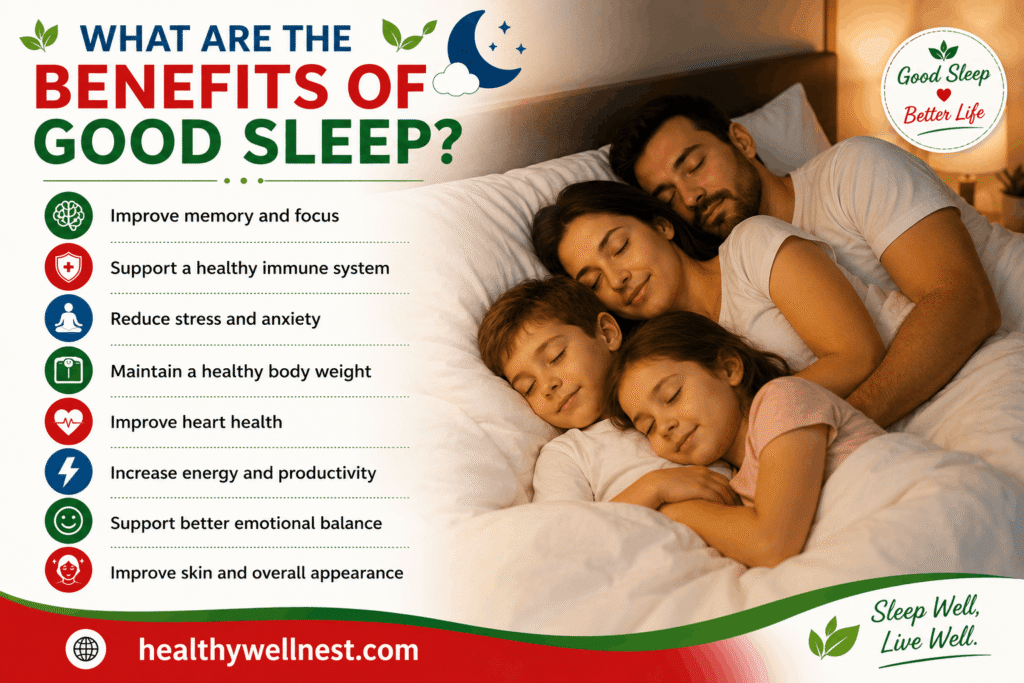
Getting enough quality sleep can help you:
- Improve memory and focus
- Support a healthy immune system
- Reduce stress and anxiety
- Maintain a healthy body weight
- Improve heart health
- Increase energy and productivity
- Support better emotional balance
- Improve skin and overall appearance
For most adults, seven to nine hours of sleep each night is generally considered healthy. However, sleep quality is just as important as sleep duration.
How to Sleep Better Naturally?
Create a Consistent Sleep Schedule
One of the best natural ways to sleep better is to follow a regular sleep schedule. Try to go to bed and wake up at approximately the same time every day, including weekends.
Your body follows a natural internal clock called the circadian rhythm. When you sleep and wake at different times each day, this rhythm gets disturbed. As a result, you may find it difficult to fall asleep at night or wake up feeling tired.
Avoid/Reduce Screen Time Before Bed
Mobile phones, laptops, televisions, and tablets have become a major reason for poor sleep. Many people scroll through social media, watch videos, reply to messages, or work late at night. While this may feel relaxing, it can make it harder for the brain to switch off.
How does screen time leads to poor sleep?
Electronic screens emit blue light, which can reduce the production of melatonin. Melatonin is a natural hormone that helps your body feel sleepy. When melatonin levels are disturbed, you may stay awake longer than expected.
Try to avoid screens for at least 30 to 60 minutes before bedtime. Instead of using your phone, choose relaxing activities such as reading a book, listening to soft music, writing in a journal, or talking with family members.
Make Your Bedroom Comfortable
Your sleeping environment has a major effect on sleep quality. A noisy, bright, hot, or uncomfortable room can disturb your sleep, even if you do not realize it.
Create a bedroom environment that encourages relaxation. Keep the room clean, quiet, and well ventilated. Use curtains or blinds to reduce outside light. If there is too much noise, consider using earplugs, white noise, or a fan sound.
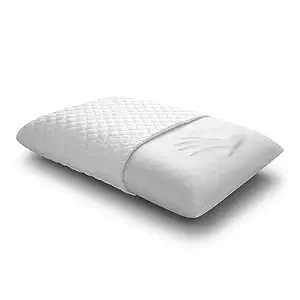
Your mattress and pillow are also important. An old mattress or unsuitable pillow can cause neck pain, back pain, and frequent waking during the night. Choose bedding that supports your sleeping position and feels comfortable.
Keep the room slightly cool if possible. Most people sleep better in a cool and comfortable environment rather than a very warm room.
Avoid Caffeine Late in the Day
Tea, coffee, energy drinks, cola, and some chocolates contain caffeine. Caffeine can help you feel alert, but it can also affect your sleep if consumed too late in the day.
The effects of caffeine may remain in the body for several hours. If you drink coffee in the evening, you may still feel mentally active at bedtime. Even if you fall asleep, caffeine can reduce the quality of deep sleep.
Try to avoid coffee, strong tea, and energy drinks at least six to eight hours before bedtime. If you enjoy a warm drink in the evening, choose caffeine-free options such as warm milk, herbal tea, or plain warm water.
Get Natural Sunlight During the Day
Natural sunlight helps regulate your body clock. When you get exposure to sunlight in the morning or daytime, your brain receives a clear signal that it is time to stay awake and active. This makes it easier for your body to feel sleepy at night.
Try to spend at least 15 to 30 minutes outside in natural daylight every day. You can take a morning walk, sit near a window, do light exercise outdoors, or simply spend time in your balcony or garden.
Morning sunlight is especially beneficial because it helps reset your sleep-wake cycle. It can also improve mood, energy levels, and focus throughout the day.

Exercise Regularly but at the Right Time
Regular physical activity can help you sleep better naturally. Exercise reduces stress, improves mood, supports healthy weight management, and helps the body use energy effectively.
You do not need intense workouts every day. Walking, yoga, cycling, stretching, swimming, or light gym exercise can all support better sleep. Even 20 to 30 minutes of daily movement can make a positive difference.
Eat Light Meals at Night
What you eat in the evening can influence your sleep. Heavy, oily, spicy, or very large meals close to bedtime may cause indigestion, acidity, bloating, or discomfort. These issues can make it difficult to fall asleep peacefully.
Try to finish dinner at least two to three hours before bedtime. Keep your dinner light and balanced. Include vegetables, whole grains, protein, and healthy fats in moderate portions.
Avoid excessive sugar, fried foods, and spicy meals late at night. Also avoid drinking too much water just before bed, as this may cause frequent trips to the bathroom.
If you feel hungry before sleeping, choose a light snack such as a banana, a handful of nuts, warm milk, or a small bowl of curd.
Practice Relaxation Before Sleeping
Stress and overthinking are common reasons people struggle to sleep. After a busy day, the mind may continue thinking about work, family responsibilities, finances, or future plans. Creating a relaxation routine before bed can help calm the nervous system.
You can try simple relaxation methods such as deep breathing, meditation, gentle stretching, prayer, journaling, or listening to calming music. Even five to ten minutes of slow breathing can reduce mental tension.
How breathing helps to get good sleep?
A simple breathing method is to inhale slowly through your nose for four seconds, hold your breath for a few seconds, and then exhale slowly through your mouth. Repeat this several times until your body feels calmer.
Limit Long Daytime Naps
A short nap can be refreshing, especially if you are tired. However, long naps during the day can make it difficult to sleep at night.
Avoid Alcohol and Smoking Before Bed
Some people believe alcohol helps them sleep, but it often reduces sleep quality. Alcohol may make you feel sleepy initially, but it can cause disturbed sleep later in the night. It may also increase snoring and frequent waking.
Smoking and nicotine can also interfere with sleep because nicotine is a stimulant. It can make the body feel more alert and increase restlessness.
Reducing alcohol and avoiding smoking before bedtime can support deeper, more continuous sleep.

Build a Simple Bedtime Routine
A bedtime routine signals your brain that the day is ending and it is time to relax. Your routine does not need to be complicated. The key is consistency.
A simple bedtime routine may include:
- Switching off screens one hour before bed
- Taking a warm bath or washing your face
- Drinking warm milk or herbal tea
- Reading a few pages of a book
- Doing five minutes of deep breathing
- Writing tomorrow’s important tasks
- Keeping the room dark and quiet
- Going to bed at the same time every night
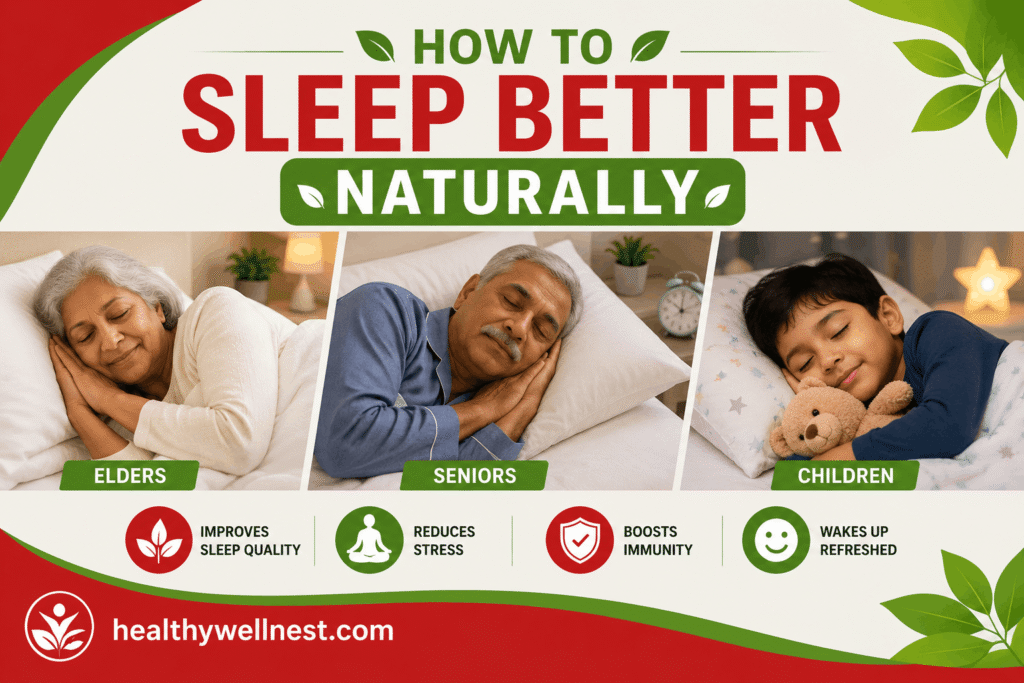
When you repeat the same routine regularly, your body starts associating these activities with sleep.