What Is Brisk Walking? Benefits, Tips, and Why It’s One of the Best Exercises for Better Health
What Is Brisk Walking and Why Is Everyone Talking About It?
In today’s fast-paced world, finding time for exercise can be difficult. Many people believe that staying fit requires expensive gym memberships, heavy workouts, or marathon training. However, one of the simplest and most effective forms of exercise is something almost everyone can do—brisk walking.
Brisk walking is a low-impact aerobic exercise that improves heart health, strengthens muscles, burns calories, reduces stress, and enhances overall well-being. Whether you’re young, middle-aged, or a senior citizen, brisk walking can become an essential part of a healthy lifestyle.
Health experts, including the World Health Organization (WHO) and the American Heart Association, recommend regular brisk walking because it significantly reduces the risk of chronic diseases while improving both physical and mental health.
What Is Brisk Walking?
Brisk walking means walking at a pace that raises your heart rate and breathing while still allowing you to carry on a conversation. It is faster than a casual stroll but slower than jogging.

Lightweight Comfortable Cushioned Walking Shoes for Men
What is the approximate speed in Brisk Walking?
- Speed of about 5–6.5 km/hour
- Around 100–130 steps per minute
- Moderate intensity where talking is possible but singing is difficult
What will happen during Brisk Walking?
- Your heart beats faster.
- Your breathing becomes deeper.
- Your muscles work harder.
- Your body burns more calories than during normal walking.
Unlike running, brisk walking puts less stress on your knees, ankles, and hips, making it suitable for almost everyone.
Best fitness Trackers
How Is Brisk Walking Different from Normal Walking?
| Normal Walking | Brisk Walking |
| Relaxed pace | Faster pace |
| Minimal increase in heart rate | Moderate increase in heart rate |
| Low calorie burn | Higher calorie burn |
| Little sweating | Mild sweating |
| Easy conversation | Conversation possible but breathing is faster |
| Suitable for leisure | Suitable for fitness |
The difference lies in intensity, not just speed.
What are the Health benefits on Brisk Walking?
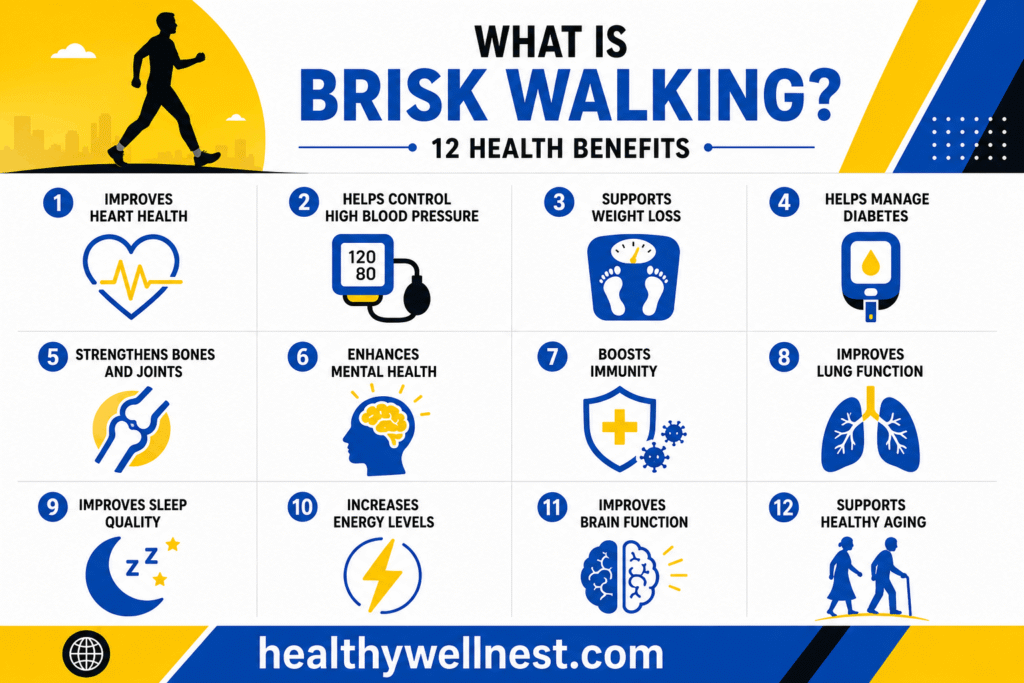
1. Improves Heart Health
Brisk walking is one of the best cardiovascular exercises.
It helps:
- Strengthen the heart muscle
- Improve blood circulation
- Lower bad cholesterol (LDL)
- Increase good cholesterol (HDL)
- Reduce blood pressure
2. Helps Control High Blood Pressure
Regular brisk walking:
- Relaxes blood vessels
- Improves blood flow
- Reduces arterial stiffness
- Helps maintain healthy blood pressure naturally
3. Supports Weight Loss
Walking briskly burns considerably more calories than slow walking.
Approximate calories burned in 30 minutes:
- 60 kg person: 140–170 calories
- 70 kg person: 170–210 calories
- 80 kg person: 200–250 calories
Combined with healthy eating, brisk walking helps reduce body fat gradually and sustainably.
4. Helps Manage Diabetes
Brisk walking improves insulin sensitivity.
Benefits include:
- Better blood sugar control
- Reduced insulin resistance
- Lower risk of Type 2 diabetes
- Improved glucose utilization
Even a 20–30 minute walk after meals can help regulate blood sugar levels.
5. Strengthens Bones and Joints
Walking is a weight-bearing exercise that strengthens:
- Bones
- Ligaments
- Tendons
- Joint-supporting muscles
Regular brisk walking may reduce the risk of osteoporosis and improve joint mobility without placing excessive strain on the body.
6. Enhances Mental Health
How does Brisk Walking is excellent for the brain?
Brisk walking or Normal walking stimulates the release of chemicals like Endorphins, Serotonin and Dopamine
These chemicals help reduce Stress, Anxiety, Depression and Mental fatigue

White Noise Machine-Create a peaceful environment for better rest and relaxation-Shop Now
7. Boosts Immunity
Moderate exercise like brisk walking strengthens the immune system by improving circulation and helping immune cells move more efficiently throughout the body.
People who walk regularly often experience fewer colds and infections.
8. Improves Lung Function
Brisk walking encourages deeper breathing.
Helps in:
- Increased oxygen intake
- Improved lung capacity
- Better stamina
- Reduced breathlessness during daily activities

Deep Breathing Exercise Trainer (Inspiratory Muscle Trainer)
9. Improves Sleep Quality
Many adults struggle with poor sleep.
Regular brisk walking:
- Regulates the body’s internal clock
- Reduces stress hormones
- Promotes deeper sleep
- Helps you fall asleep faster
Morning or early evening walks are particularly beneficial.
10. Increases Energy Levels
Although exercise requires energy, it actually helps your body produce more.
Brisk walking improves:
- Blood circulation
- Oxygen delivery
- Muscle efficiency
- Cellular energy production
Many people report feeling more energetic throughout the day after establishing a walking routine.

Boost your brain and heart health with premium Omega-3—shop now!
11. Improves Brain Function
Walking stimulates blood flow to the brain.
Benefits include:
- Better concentration
- Improved memory
- Enhanced creativity
- Reduced cognitive decline with age
Regular walkers often experience sharper thinking and better productivity.
12. Supports Healthy Aging
Brisk walking helps maintain:
- Muscle strength
- Balance
- Coordination
- Mobility
- Independence
Older adults who walk regularly have a lower risk of falls and enjoy a higher quality of life.
How Long Should You Walk?
General recommendations:
- Beginners: 15–20 minutes daily
- Intermediate: 30 minutes daily
- Advanced: 45–60 minutes daily
Aim for at least 150 minutes of moderate-intensity activity each week, as recommended by health authorities.
How does morning Brisk Walk help?
Morning Brisk walk helps by;
- Fresh air
- Boosts metabolism
- Improves focus
- Increases energy
How does evening Brisk Walk help?
- Relieves stress
- Helps digestion
- Promotes better sleep
Is brisk walking better than running?
For many people, brisk walking provides excellent cardiovascular benefits with a lower risk of joint injuries. Running burns more calories in less time, but brisk walking is easier to sustain and suitable for a wider range of people.
How many steps should I aim for each day?
While goals vary, many adults benefit from aiming for 7,000–10,000 steps per day, including at least 30 minutes of brisk walking.