Top 10 Symptoms of Kidney Failure You Should Never Ignore
Kidneys are among the hardest-working organs in the human body. These two bean-shaped organs, located on either side of your spine, filter nearly 50 gallons (about 180 liters) of blood every day. They remove waste products, excess fluids, and toxins while maintaining the body’s electrolyte balance, regulating blood pressure, and producing hormones essential for healthy bones and red blood cell production.
When the kidneys gradually lose their ability to perform these vital functions, the condition is known as kidney failure or chronic kidney disease (CKD). Kidney failure often develops silently over months or years. Unfortunately, many people do not experience obvious symptoms until the kidneys have already lost a significant portion of their function.
Recognizing the early warning signs can help you seek medical attention sooner, potentially slowing disease progression and preventing life-threatening complications.
Following are the top 10 symptoms of kidney failure that everyone should know.
1. Persistent Fatigue and Weakness
One of the earliest and most common symptoms of kidney failure is constant tiredness.
Healthy kidneys produce a hormone called erythropoietin, which stimulates the bone marrow to make red blood cells. As kidney function declines, less erythropoietin is produced, leading to anemia.
When anemia develops, your body receives less oxygen, causing:
- Extreme tiredness
- Weakness
- Difficulty concentrating
- Reduced physical stamina
- Feeling exhausted even after adequate sleep
Many people mistake this symptom for stress, aging, or lack of sleep, delaying diagnosis.
2. Swelling in the Legs, Feet, Hands, or Face
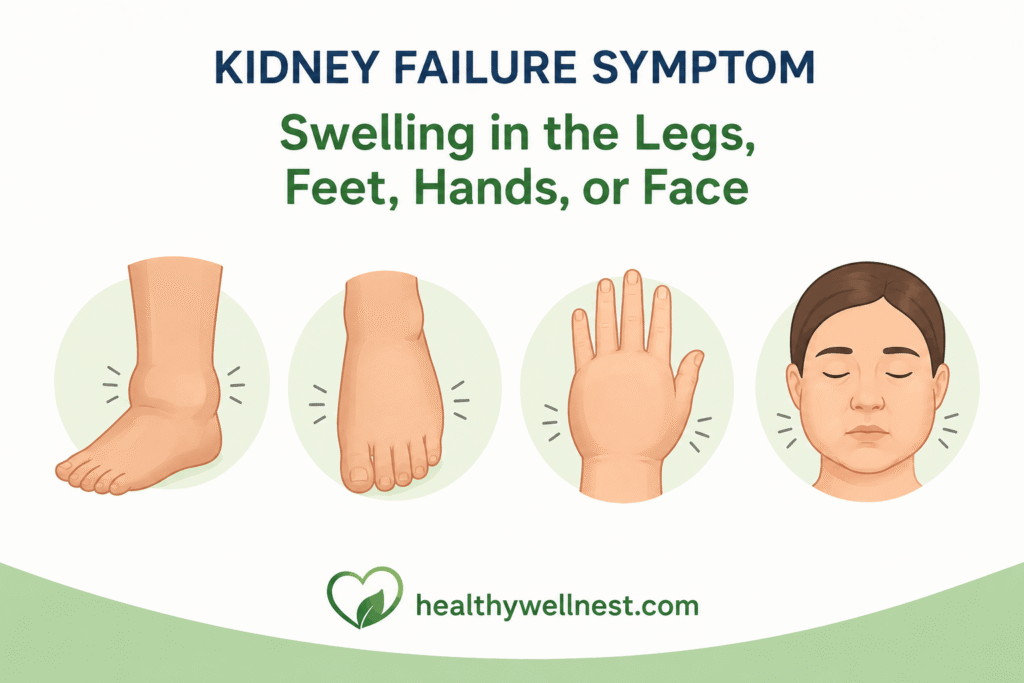
Healthy kidneys remove excess water and sodium from the body.
When they stop working efficiently, fluids begin to accumulate in tissues, causing noticeable swelling known as edema.
Common areas affected include:
- Ankles
- Feet
- Lower legs
- Hands
- Eyelids
- Face
The swelling usually worsens throughout the day and may leave an indentation after pressing the skin.
Persistent swelling should never be ignored, especially if accompanied by high blood pressure or decreased urination.
3. Changes in Urination
Changes in urination are often among the earliest signs of kidney disease.
You may notice:
- Frequent urination, especially at night
- Reduced urine output
- Foamy urine
- Dark-coloured urine
- Blood in urine
- Difficulty passing urine
- Pain during urination
Foamy urine may indicate protein leakage, while blood in urine could suggest kidney damage, infections, or kidney stones.
Any persistent change in urinary habits should be evaluated by a healthcare professional.
4. Shortness of Breath
Kidney failure can cause breathlessness in two major ways.
Fluid build up
Damaged kidneys cannot remove excess fluid effectively. The fluid may accumulate in the lungs, making breathing difficult.
Anemia
As kidney-related anemia progresses, the body’s oxygen-carrying capacity decreases, resulting in breathlessness during routine activities such as:
- Walking
- Climbing stairs
- Light exercise
- Even resting in severe cases
Shortness of breath should always receive prompt medical attention.

5. Persistent Nausea and Vomiting
As waste products accumulate in the blood stream, the condition called uremia develops.
This toxin build up irritates the digestive system, causing:
- Nausea
- Vomiting
- Loss of appetite
- Bad taste in the mouth
- Food aversion
Many patients begin skipping meals because eating makes them feel worse.
Over time, this contributes to weight loss and nutritional deficiencies.
6. Loss of Appetite and Unexplained Weight Loss
People with kidney failure frequently lose interest in food.
Several factors contribute to this problem:
- Uremic toxins
- Nausea
- Altered taste sensation
- Mouth ulcers
- Digestive discomfort
Foods that were once enjoyable may suddenly taste metallic or unpleasant.
As appetite decreases, patients unintentionally lose weight and muscle mass, making them feel even weaker.
7. Itchy Skin

Soothe and hydrate dry, itchy skin with a gentle moisturizer-Shop Now
Persistent itching without an obvious skin condition can be a warning sign of advanced kidney disease.
Healthy kidneys maintain the balance of:
- Calcium
- Phosphorus
- Minerals
- Electrolytes
When kidney function declines, these minerals accumulate in the blood, leading to severe itching.
Patients often describe:
- Dry skin
- Continuous itching
- Scratching that worsens at night
- Skin irritation without visible rash
This symptom can significantly affect sleep and quality of life.
8. Muscle Cramps
Kidney failure disrupts the balance of essential electrolytes including:
- Potassium
- Calcium
- Magnesium
- Sodium
These electrolyte abnormalities interfere with normal muscle function.
Common symptoms include:
- Painful leg cramps
- Muscle twitching
- Weak muscles
- Sudden muscle spasms
Night-time leg cramps are especially common in people with chronic kidney disease.
9. Difficulty Sleeping
Many people with kidney disease experience poor-quality sleep.
Common sleep-related problems include:
- Insomnia
- Frequent awakening
- Restless legs syndrome
- Muscle cramps during sleep
- Sleep apnea
- Daytime sleepiness
Uremic toxins and itching also contribute to sleep disturbances.
Poor sleep further increases fatigue, creating a vicious cycle.
10. High Blood Pressure That Is Difficult to Control
The kidneys play a major role in regulating blood pressure.
Kidney disease and hypertension have a two-way relationship:
- High blood pressure damages kidneys.
- Damaged kidneys further increase blood pressure.
Warning signs include:
- Persistent hypertension
- Blood pressure requiring multiple medications
- Frequent headaches
- Blurred vision
- Dizziness
Uncontrolled hypertension accelerates kidney damage and increases the risk of heart attack and stroke.

Upper Arm Automatic Blood Pressure Monitor with Bluetooth-Shop Now
Monitor your blood pressure at home with a reliable digital monitor.
Who Is at Higher Risk of Kidney Failure?
Certain people are much more likely to develop kidney disease.
Risk factors include:
- Diabetes
- High blood pressure
- Heart disease
- Obesity
- Smoking
- Family history of kidney disease
- Age above 60 years
- Recurrent kidney stones
- Frequent urinary tract infections
- Long-term use of painkillers

How to Reduce the Risk of Kidney Failure?
Protecting your kidneys begins with adopting healthy lifestyle habits.
Some effective preventive measures include:
- Keep blood pressure below the target recommended by your doctor.
- Control blood sugar if you have diabetes.
- Drink adequate water unless restricted by your physician.
- Maintain a healthy body weight.
- Exercise regularly for at least 30 minutes most days.
- Limit salt intake.
- Avoid smoking and excessive alcohol consumption.
- Do not overuse painkillers without medical advice.
- Eat a balanced diet rich in fruits, vegetables, and whole grains.
- Get regular health check-ups, especially if you have diabetes or hypertension.
Small lifestyle changes can make a significant difference in preserving kidney health over the long term.
Taking care of your kidneys today can help protect your overall health for years to come.